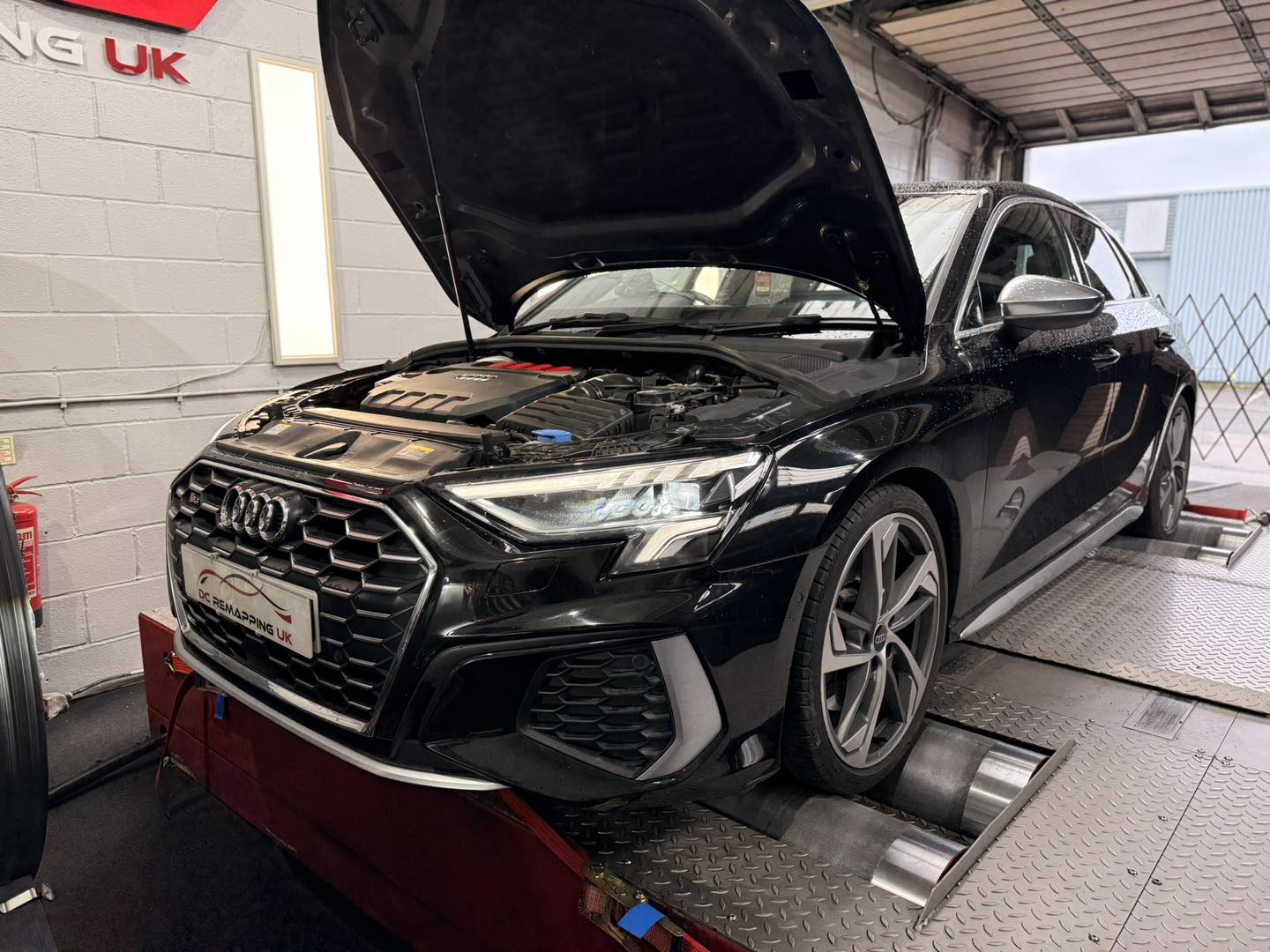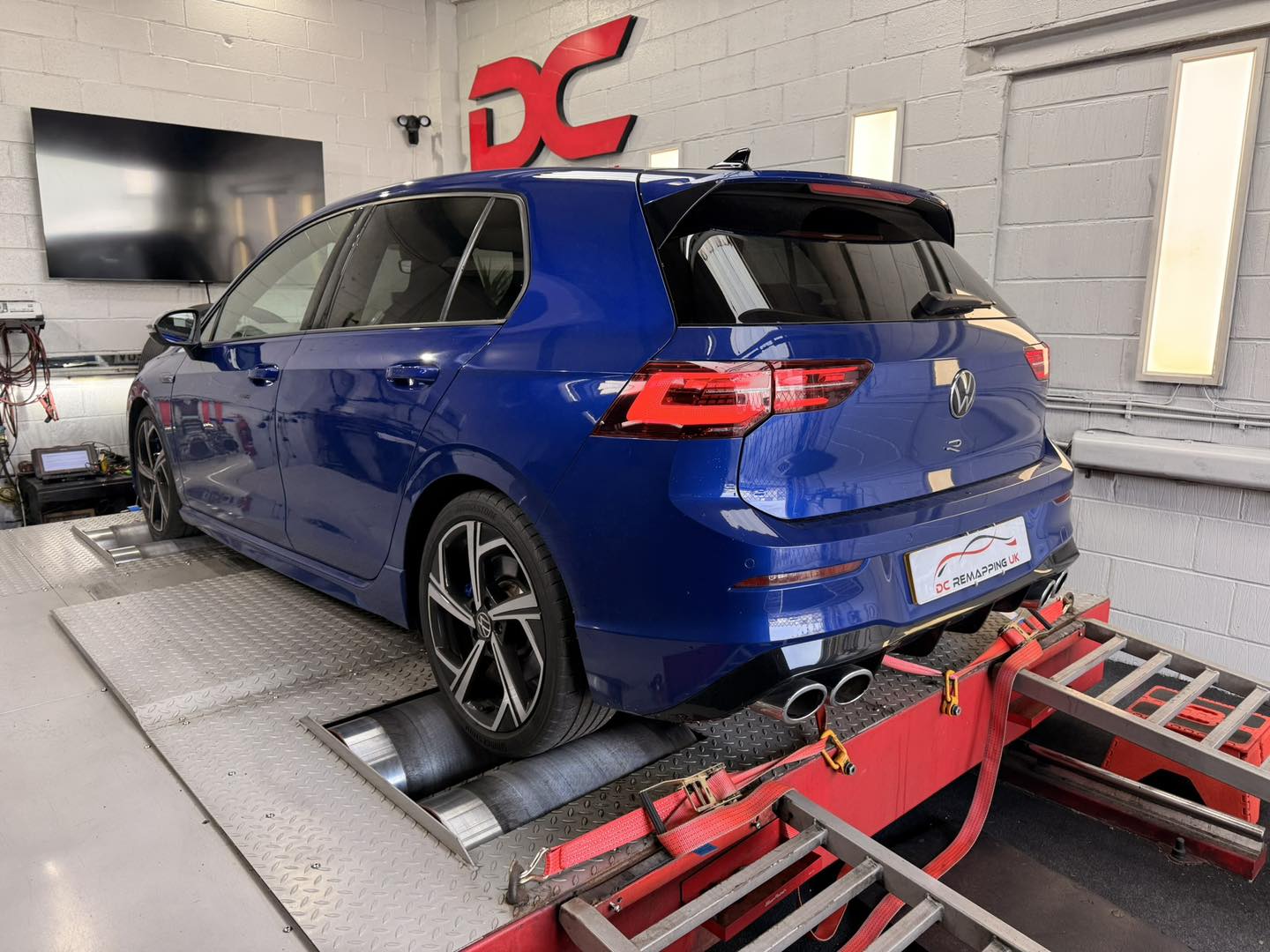
Accurate BHP and torque testing on our V-Tech VT-4 linked 4WD rolling road dyno. Safe for xDrive, Quattro and 4Matic systems.
We operate a V-Tech VT-4 linked 4WD rolling road dyno, designed to deliver accurate, repeatable power figures across both 2WD and 4WD vehicles.
Every dyno run includes everything you need to understand your vehicle's true performance, presented clearly on the day.
Our 4WD linked rolling road is the foundation of everything we do. Every map we build is developed and verified on it — and it's one of the few dynos in the Northwest that's genuinely safe for BMW xDrive and VAG 4Motion vehicles.
A rolling road measures the actual power and torque your engine delivers to the wheels, under load, in real conditions. The car drives onto the dyno, the wheels sit on rollers, and we run it through the rev range with sensors recording every point on the power curve.
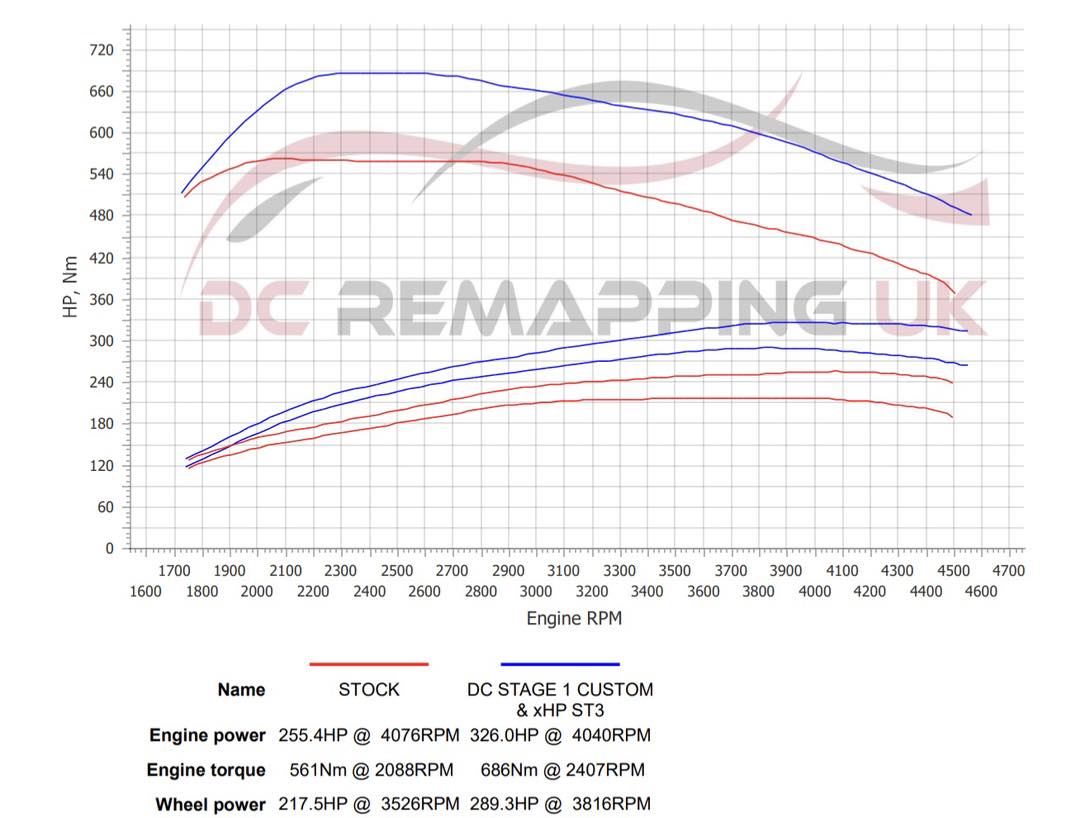
The result is a power curve — a graph showing exactly what your engine produces across the full RPM range. It's the only honest way to measure output. Manufacturer figures are measured at the flywheel under ideal lab conditions. Dyno figures are what's actually reaching the tarmac.
Most cars come in below their claimed figures. Factory spec sheets quote optimistic numbers measured under controlled conditions. On our dyno, it's common to see a car produce 10–20bhp less than the badge suggests — which makes the gains from a good tune look even better on paper.
Most tuning workshops have a standard two-wheel-drive rolling road. That's fine for a rear-wheel or front-wheel-drive car. Put a permanently four-wheel-drive vehicle on a 2WD dyno and you've got a problem.
When only one axle is on the rollers and the other is stationary, the transfer box tries to compensate. It's doing something it was never designed to do — and the stress it puts on the transfer box, centre differential and driveshafts can cause real mechanical damage. It also gives inaccurate readings, because the car's traction control and torque vectoring systems can't operate normally.
Our dyno mechanically couples both axle roller sets so they spin at the same speed simultaneously — exactly as they would on the road. The transfer box, centre diff and xDrive system all operate normally. No stress. No damage. Accurate numbers.
Before booking elsewhere: If your BMW or VAG has permanent four-wheel drive and the workshop can't confirm they have a mechanically linked 4WD dyno, your car shouldn't be on their rollers. Ask specifically — not all workshop dynos are equal, and the difference matters.
Not all remapping is the same. Here's what separates a proper dyno session from a generic file flash or a mobile remap van outside your house.
| DC Remapping UK 4WD Linked Dyno |
Standard 2WD Dyno | Mobile / Driveway Remap | |
|---|---|---|---|
| Safe for xDrive / 4Motion | ✔ | ✘ | ✘ |
| Custom map for your car | ✔ | Varies | ✘ |
| Live data feedback during tune | ✔ | Sometimes | ✘ |
| Verified baseline power run | ✔ | ✔ | ✘ |
| Pre-tune health check | ✔ | Varies | Varies |
| Post-tune verification run | ✔ | Sometimes | ✘ |
| Printed dyno chart | ✔ | Sometimes | ✘ |
| Gains are estimated or measured? | Measured | Measured | Estimated |
The dyno isn't just for tuning day. It's a diagnostic tool, a verification instrument, and the only honest way to know what your car produces.
Want to know exactly what your car produces? A standalone power run puts your vehicle on the dyno in its current state and gives you a verified BHP and torque figure across the full rev range. Useful as a baseline before modifications, to verify a remap done elsewhere, or to settle an argument at a car meet. You leave with a printed dyno chart.
Every ECU remap we carry out includes dyno runs before and after the tune. The pre-tune run establishes your baseline and helps us understand how your engine is currently performing. The post-tune run confirms the gains are real and the map is working as intended across the whole rev range, not just at peak. You leave with both charts.
This is what separates us from a generic file flash. Your map is developed with the car on the dyno — we make adjustments, run the car, read the data, adjust again. Multiple passes until fuelling, boost, timing and power delivery are where we want them. It takes longer. It produces better results. And you leave knowing the gains have been earned, not assumed.
All sessions are by appointment at our Birchwood, Warrington workshop. Here's exactly what happens when you arrive.
Before the car goes on the rollers we run a full OBD diagnostic. We're checking for fault codes, DPF condition, fluid levels and anything that could affect the run or mask a problem. If something's not right, we'll flag it before we start.
The car is strapped to the dyno and run through low-load passes to bring engine and transmission temperatures up to operating conditions. Cold pulls produce misleading numbers and aren't how engines actually operate on the road.
Full-load pulls from low RPM to the rev limiter, with sensors logging power, torque, boost, temperatures, and fuelling throughout. For a standard power run session, we typically do three pulls and take the best. For live tuning, this is where the iterative map development happens.
We go through the data with you — peak figures, the shape of the power curve, anything notable from the live data. You leave with a printed dyno chart showing your BHP and torque figures across the rev range. Something you can hold on to, not just a number someone told you.
Something not covered here? Call or WhatsApp us on 01925 819002.
Yes — that's the point. Our mechanically linked 4WD rolling road is specifically designed for permanently four-wheel-drive vehicles. Both axle roller sets are coupled so the car behaves exactly as it would on the road. BMW xDrive, VAG 4Motion, Audi Quattro, and similar AWD systems are all safe on our dyno. A standard 2WD dyno is not suitable for these vehicles.
Absolutely. A standalone power run is a perfectly valid booking on its own. It's useful if you want a verified baseline before any modifications, want to confirm gains from work done elsewhere, or just want to know what your car actually produces. You'll get a printed dyno chart to take away.
A standalone power run session typically takes 1 to 2 hours, including the vehicle check, warm-up passes, power pulls, and time to go through the results with you. A full remap with live dyno development runs between 3 and 5 hours depending on the vehicle and how many passes the tune requires to get right.
Very. Our dyno is calibrated and we run multiple passes to get consistent readings. Results can vary slightly between runs due to ambient temperature, atmospheric pressure, and tyre temperature — which is why we run multiple pulls and work with the consistent figure rather than the single best number. We'll always explain the data to you, not just hand you a sheet.
A driveway or mobile remap involves a technician connecting to your OBD port, flashing a pre-written file, and leaving. There's no load, no live data feedback during the tune, and no way to verify what the car actually produces after the map goes on. A dyno remap is developed with the car under real load on calibrated equipment. The map is built around measured data from your actual engine — not averaged data from similar cars. It takes longer and costs more. It's also genuinely better.
Yes. We can remap over an existing tune. We always do a full diagnostic before starting and will do a baseline pull to see what the current map is producing. If the existing tune has any obvious issues, we'll point them out before we proceed. We store the current file before making any changes.
Make sure the car has enough fuel for extended high-load running — we'd suggest at least half a tank of the best quality fuel you can get locally. Check your oil level is correct before the appointment. If you know of any existing issues with the car, let us know when you book so we can factor them in.
Book a power run or full custom dyno tune at our Warrington workshop. Standalone sessions and full remap packages available.